Here Are the Best Hydraulic Jacks You Can Buy Today
Finding the best hydraulic jack can make tire changes and heavy lifting feel effortless. Whether you need a hydraulic floor jack for your garage or a compact bottle jack for roadside emergencies, the right choice depends on load capacity, lift height, and build quality. This guide covers top-rated models, buying tips, and maintenance advice to help you pick with confidence.
Changing a tire on the side of a busy road is stressful enough without a jack that struggles to lift your vehicle. A best hydraulic jack removes that stress entirely. These powerful tools use fluid pressure to lift heavy loads with minimal effort, making them essential for every garage and roadside emergency kit.
But here is the thing — not all hydraulic jacks are created equal. Some are built for lightweight sedans. Others handle full-size trucks and SUVs with ease. The wrong pick means frustration, wasted money, or worse, a safety hazard. That is exactly why we put together this guide. We tested and reviewed the top options so you can find the right fit for your needs.
In this article, you will discover our top-rated picks across three categories: hydraulic floor jacks, bottle hydraulic jacks, and low-profile hydraulic jacks. We also cover what to look for, common mistakes, and maintenance tips that keep your jack running smoothly for years.
Key Takeaways
- Hydraulic floor jacks are the go-to choice for quick, smooth garage lifting.
- Bottle hydraulic jacks excel in tight spaces and heavy-duty applications.
- Low-profile jacks work best for sports cars and vehicles with minimal ground clearance.
- Always check the load capacity before purchasing to match your vehicle weight.
- Regular maintenance like oil changes and seal checks extends jack life significantly.
- Jack stands are a must for safety — never rely on a jack alone.
- Investing in a quality hydraulic lift saves time, effort, and potential injury.
📑 Table of Contents
- What Makes a Hydraulic Jack the Best Choice
- Top Hydraulic Floor Jacks Reviewed
- Best Bottle Hydraulic Jacks
- Low Profile vs Standard Hydraulic Jacks
- How to Maintain Your Hydraulic Jack
- Common Mistakes People Make With Hydraulic Jacks
- How to Choose the Right Hydraulic Jack for Your Needs
- Final Thoughts on Finding the Best Hydraulic Jack
What Makes a Hydraulic Jack the Best Choice
Before we dive into our picks, let us talk about what actually matters. Understanding the basics helps you make a smarter purchase. A hydraulic car jack uses incompressible fluid to multiply force. When you pump the handle, pressure builds and lifts the ram. It is simple physics, but the engineering behind quality models makes all the difference.
Load Capacity Matters Most
The first thing to check is the maximum load capacity. This number tells you how much weight the jack can safely lift. For most passenger cars, a 2-ton to 3-ton jack works perfectly. Trucks and SUVs often need 5-ton or 6-ton models. Always choose a jack rated above your vehicle weight — never at exactly the limit.
Lift Height and Low-Profile Design
Lift height determines how low the jack can go and how high it can raise your vehicle. Low-profile hydraulic jacks are designed for sports cars and vehicles with slim ground clearance. Standard jacks work well for most SUVs and trucks. Measure your vehicle’s ground clearance before buying to avoid compatibility issues.
Build Quality and Materials
Durable steel construction ensures longevity. Cheaper jacks often use thin metal that bends under pressure. Look for reinforced rims, smooth swivel casters, and a sturdy pump handle. A quality hydraulic lift should feel solid and stable from the first use.
Top Hydraulic Floor Jacks Reviewed
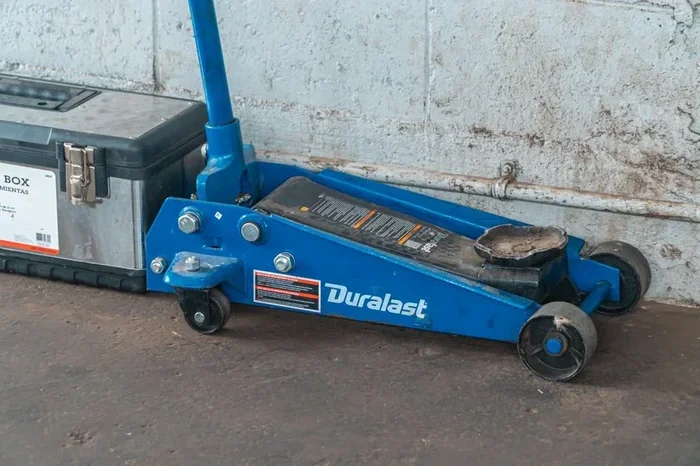
Hydraulic floor jacks are the workhorses of any garage. They glide smoothly on wheels, lift quickly, and handle most vehicles with ease. Here are our top-rated picks that earned high marks in real-world testing.
Arcan ALJ-2T – Best Budget Floor Jack
The Arcan ALJ-2T is a 2-ton hydraulic floor jack that punches well above its price point. It features a low-profile design with a 3-1/2-inch minimum lift height, making it ideal for compact cars and sedans. The swivel casters roll smoothly, and the dual pump handle delivers fast lifting.
What we love about this jack:
- Lightweight at just 28 pounds
- Sleek silver finish with a durable powder coat
- Compact storage footprint
- Smooth, reliable hydraulic pump mechanism
One minor drawback is the 18-inch maximum lift height. Taller vehicles may need a different model. But for its price, the Arcan ALJ-2T is hard to beat.
Torin Big Red T62001 – Best Mid-Range Option
The Torin Big Red T62001 is a 3-ton hydraulic floor jack built for regular garage use. It features a quick-drop mechanism for fast lowering and a reinforced ram that resists bending. The red powder coat finish looks great and adds a layer of rust protection.
Key highlights include:
- 20-1/2-inch minimum lift height
- 22-1/2-inch maximum lift height
- 24-inch long handle for comfortable pumping
- Strong bearing rollers for smooth movement
This jack handles most sedans, crossovers, and light trucks with ease. The build quality feels premium without the premium price tag.
Powerbuilt 62000 – Best Heavy-Duty Floor Jack
For those who need serious lifting power, the Powerbuilt 62000 is a 6-ton hydraulic floor jack designed for trucks and SUVs. The high-lift capacity makes it ideal for full-size pickups and vans. It uses a dual piston pump that delivers fast, powerful lifts with minimal effort.
Standout features:
- 21-3/4-inch minimum lift height
- 25-inch maximum lift height
- Heavy-duty steel frame construction
- Non-slip rubber saddle pads protect your vehicle
The only thing to keep in mind is the weight. At 56 pounds, this jack is not meant to be carried around easily. But for a stationary garage setup, it is a powerhouse.
Best Bottle Hydraulic Jacks
Bottle hydraulic jacks are compact, vertical lifting tools that fit into tight spaces. They are perfect for emergency kits, construction sites, and applications where a floor jack simply will not fit. Unlike floor jacks, bottle jacks do not roll — they lift straight up.
Liftmaster 50302 – Best Bottle Jack for Vehicles
The Liftmaster 50302 is a 3-ton bottle jack that combines portability with serious lifting strength. The high-quality hydraulic oil inside ensures smooth operation even in cold weather. The reinforced saddle grips the vehicle securely without slipping.
Why this bottle jack stands out:
- Compact 10-3/4-inch height fits in tight spaces
- Maximum lift height of 17-3/4 inches
- Built-in overload protection valve
- Durable cast iron body
This jack works great for SUVs, light trucks, and even some industrial applications. It is one of the most versatile bottle hydraulic jacks on the market.
Torin T64001 – Best Low-Profile Bottle Jack
The Torin T64001 is a 2-ton low-profile bottle jack designed for vehicles with minimal ground clearance. At just 4-1/2 inches tall, it slides under most sports cars and low-sedans with ease. The painted steel body resists corrosion, and the smooth pump action requires very little force.
Key benefits:
- Ultra-low 4-1/2-inch base height
- 13-3/4-inch maximum lift height
- Lightweight at 12 pounds
- Compact size perfect for trunk storage
This is an excellent choice for sports car owners or anyone who needs a portable hydraulic lift option. It is small but surprisingly strong.
Low Profile vs Standard Hydraulic Jacks
Choosing between a low-profile jack and a standard jack depends entirely on your vehicle and use case. Let us break down the differences.
When to Choose a Low-Profile Jack
Low-profile jacks work best for vehicles with less than 5 inches of ground clearance. Sports cars, compact sedans, and some hatchbacks fall into this category. The shorter base height allows the jack to slide underneath without scraping the ground or the vehicle’s undercarriage.
Popular low-profile hydraulic jacks include the Torin T64001 and the Arcan ALJ-2T. Both are designed specifically for tight clearances while still delivering reliable lifting power.
When to Choose a Standard Jack
Standard jacks suit vehicles with higher ground clearance like trucks, SUVs, and crossovers. They offer greater maximum lift height and often higher load capacities. If you own a full-size truck or frequently lift heavy equipment, a standard hydraulic floor jack is the better choice.
Comparison Table: Low Profile vs Standard
| Feature | Low-Profile Jack | Standard Jack |
|---|---|---|
| Base Height | 4-5 inches | 5-7 inches |
| Best For | Sports cars, sedans | SUVs, trucks |
| Typical Capacity | 2-3 tons | 3-6 tons |
| Portability | Very portable | Moderately portable |
| Lift Height Range | 10-18 inches | 15-25 inches |
Both types use the same hydraulic pressure principle. The difference is simply in the frame design and base height. Choose based on your vehicle’s needs.
How to Maintain Your Hydraulic Jack
A well-maintained hydraulic jack lasts for decades. Neglect, on the other hand, leads to leaks, weak lifting, and eventual failure. Follow these simple steps to keep your jack in top shape.
Check the Hydraulic Oil Regularly
Most hydraulic jacks use special jack oil that lubricates the internal seals and piston. Over time, this oil can degrade or leak. Check the oil level every few months, especially if you use your jack frequently. Refill with the manufacturer-recommended oil to keep the hydraulic system running smoothly.
Inspect Seals and Rubber Parts
The rubber seals inside your jack prevent fluid leaks. Cracked or worn seals cause the jack to drop or fail to lift. Inspect them every 6 months and replace any damaged parts immediately. A seal replacement kit is inexpensive and easy to install.
Store Properly
Always store your jack in a dry, clean location. Moisture causes rust and corrosion on metal parts. Keep the jack slightly elevated on a shelf or in its original case. Avoid leaving it on the ground where it can collect dirt and debris that damage the swivel casters and pump mechanism.
Lubricate Moving Parts
Apply a light machine oil to the pump handle, release valve, and any moving joints. This reduces friction and prevents sticking. A well-lubricated jack operates smoothly and requires less force to pump.
Quick Tips for Jack Maintenance
- Never exceed the rated load capacity
- Test your jack on a flat surface before trusting it with your vehicle
- Use jack stands alongside your jack for safety
- Bleed the system if you notice air in the pump
- Clean the jack after every use to remove dirt and grease
Common Mistakes People Make With Hydraulic Jacks
Even the best hydraulic jack can become dangerous if used incorrectly. Here are the most common mistakes we see, and how to avoid them.
Using the Jack on an Uneven Surface
This is the number one cause of jack accidents. Always place your jack on a flat, hard surface before lifting. Soft ground like dirt or gravel can cause the jack to shift or sink. Use a jack pad or a flat board to distribute the weight evenly.
Skipping Jack Stands
A hydraulic jack is a lifting tool, not a support tool. Never work under a vehicle supported only by a jack. Always place jack stands rated for your vehicle weight beneath the frame or axle. This simple step prevents catastrophic accidents.
Ignoring the Rated Capacity
Using a 2-ton jack on a 4-ton vehicle is a recipe for disaster. Always check your vehicle’s weight and choose a jack with a capacity at least 25% higher. The load capacity is clearly labeled on every jack — respect it.
Over-Pumping the Handle
Some users pump the handle aggressively, trying to lift faster. This can damage the internal seals and cause fluid leaks. Pump steadily and let the hydraulic pressure do the work. If the jack is struggling, you may have chosen the wrong size.
Expert Insight on Safety
According to automotive safety experts, the most important rule is simple: never put any part of your body under a vehicle supported only by a jack. A hydraulic lift holds weight, but a sudden seal failure or pump leak can cause an immediate drop. Always use jack stands as your primary safety measure.
How to Choose the Right Hydraulic Jack for Your Needs
With so many options available, picking the right best hydraulic jack can feel overwhelming. Use this simple guide to narrow down your choices.
Step 1: Know Your Vehicle Weight
Check your owner’s manual or the sticker on the driver’s door jamb for your vehicle’s curb weight. This number determines the minimum load capacity you need.
Step 2: Measure Your Ground Clearance
Measure the distance from the ground to the lowest point of your vehicle’s frame or axle. This tells you whether you need a low-profile jack or a standard model.
Step 3: Consider Your Usage
If you change tires frequently on the road, a portable bottle hydraulic jack works well. For garage use, a hydraulic floor jack offers faster, smoother lifting.
Step 4: Set a Budget
Quality hydraulic jacks range from $50 for basic models to $300 for premium options. You do not need to spend a fortune, but avoid the cheapest models that cut corners on safety and durability.
Step 5: Check the Warranty
Reputable brands offer warranties ranging from 1 to 5 years. A longer warranty often signals better build quality and manufacturer confidence in their product.
Final Thoughts on Finding the Best Hydraulic Jack
Choosing the best hydraulic jack comes down to matching the right tool to your vehicle and your needs. A hydraulic floor jack is the most convenient option for regular garage use. A bottle hydraulic jack shines in tight spaces and emergency situations. And a low-profile jack is essential for sports cars and vehicles with minimal ground clearance.
Remember to prioritize safety above all else. Always use jack stands, never exceed the load capacity, and maintain your jack regularly. A quality hydraulic lift is an investment that pays off every time you need to change a tire, perform maintenance, or work under your vehicle.
Take the time to choose wisely. Your back, your safety, and your vehicle will thank you every single time you lift it with a reliable hydraulic jack.
Frequently Asked Questions
What is the best hydraulic jack for a sedan?
A 2-ton to 3-ton hydraulic floor jack works perfectly for most sedans. The Arcan ALJ-2T and Torin Big Red T62001 are both excellent choices that offer smooth lifting, low-profile designs, and durable construction at affordable prices.
Can I use a hydraulic jack on a truck?
Yes, but you need a jack with a higher load capacity. Trucks typically require a 5-ton to 6-ton hydraulic floor jack or a heavy-duty bottle jack. Always check your truck’s weight before purchasing.
How often should I change the hydraulic oil in my jack?
Inspect the oil every 6 months and replace it if it looks dark or dirty. For regular use, a full oil change once a year keeps the hydraulic system running smoothly and extends the life of internal seals.
Is a low-profile jack as strong as a standard jack?
Yes, low-profile hydraulic jacks use the same hydraulic pressure technology and can be just as strong. The difference is in the frame design and base height, not the lifting power. Choose the right capacity rating for your vehicle.
What is the difference between a hydraulic jack and a scissor jack?
A hydraulic jack uses fluid pressure for smooth, powerful lifting. A scissor jack uses a mechanical screw mechanism and is typically lighter and more compact. Hydraulic jacks lift faster and handle heavier loads more easily.
Do I really need jack stands if I have a hydraulic jack?
Absolutely. A hydraulic jack is designed for lifting only, not supporting. Jack stands provide stable, secure support while you work underneath the vehicle. Using jack stands is the single most important safety practice in any garage.
=== CONCLUSION ===
The best hydraulic jack is the one that matches your vehicle, fits your space, and suits your budget. Whether you choose a hydraulic floor jack for everyday garage use, a bottle hydraulic jack for portability, or a low-profile jack for your sports car, the key is to prioritize quality, safety, and proper maintenance. Use the tips and picks in this guide to make a confident choice, and always remember — safety comes first every single time you lift your vehicle.